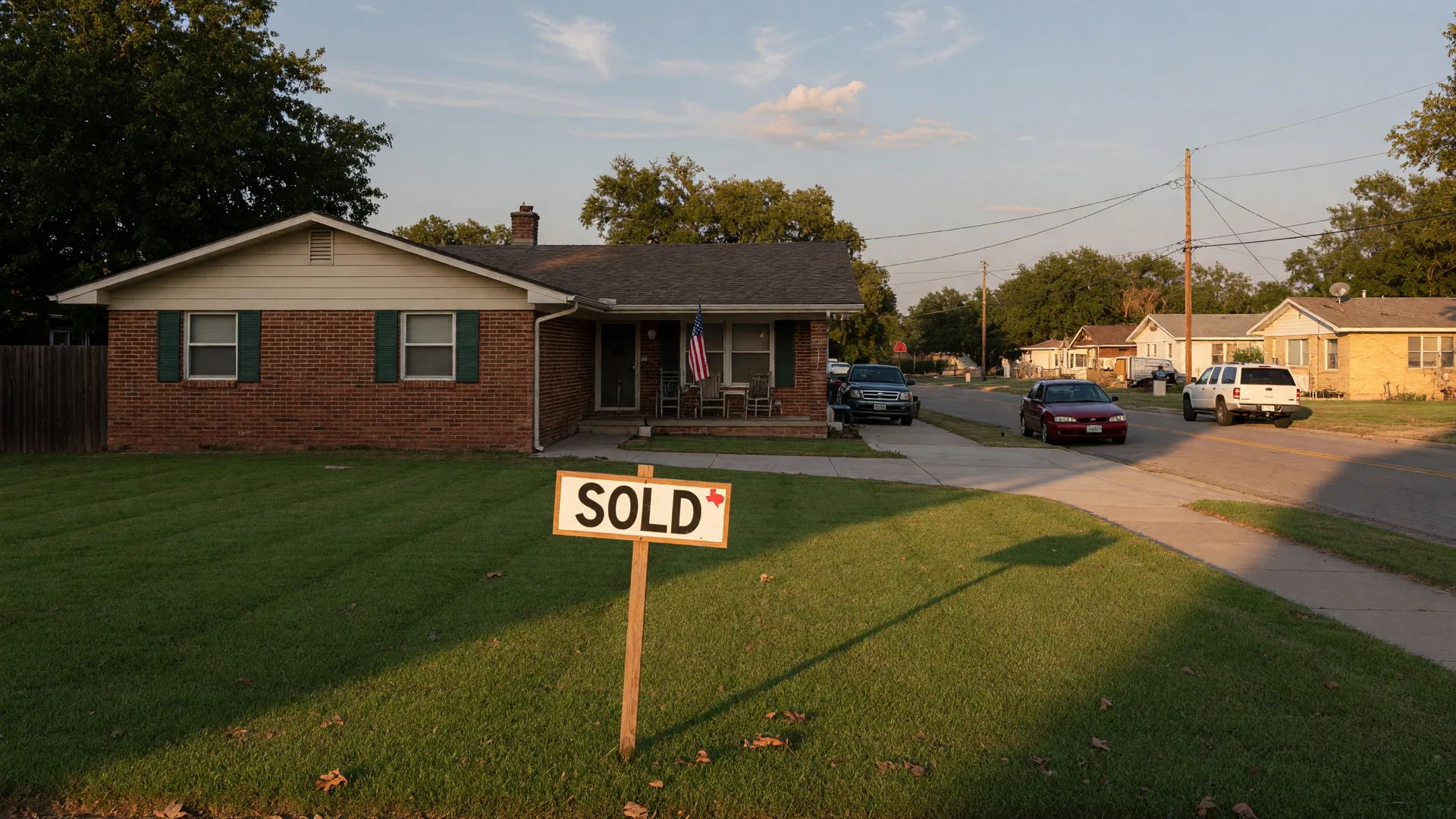
Earnest money and the option period are two of the most misunderstood parts of a Texas home purchase, and they are also two of the most protective. Earnest money is the deposit that tells the seller your offer is real, and the option period is your chance, as a buyer, to inspect the home and change your mind without losing that deposit. Once you understand how the two work together, a lot of the anxiety around making an offer goes away.
My name is De Wayne Mortensen II. I am a REALTOR® with Better Homes and Gardens Real Estate Hometown in Brenham, licensed in Texas (836279) and California (01749107), with more than 20 years helping buyers and sellers across Washington County and South Central Texas. I have written and reviewed thousands of contracts over my career, including years running a brokerage, and I want you to walk into the offer process knowing exactly what you are committing to and what protection you have. Let me walk you through it in plain language.
What Is Earnest Money in Texas?
Earnest money is a good-faith deposit the buyer makes when an offer is accepted, to show the seller they are serious about buying the home. It is not a down payment. Your down payment is paid at closing. The earnest money is a separate deposit that is held by a neutral third party, almost always the title company, and it is credited back to you at closing toward the purchase price.
Think of it this way: when you make an offer, you are asking the seller to take their home off the market and stop showing it to other buyers. The earnest money is your side of that bargain. It tells the seller you are not going to tie up their house for a month and then walk away on a whim. On a typical Texas purchase, earnest money runs about 1 percent to 3 percent of the purchase price, so on a $300,000 home that is usually $3,000 to $9,000. The exact amount is negotiated and written into the contract, and a stronger earnest money deposit can make your offer stand out in a competitive situation.
Where Does the Earnest Money Go?
The earnest money does not go directly to the seller. It is deposited with a third party, normally the title company, within a few days after the contract is signed. The standard Texas contract used for most residential sales, the Texas Real Estate Commission's One-to-Four Family Residential Contract, requires the earnest money to be delivered to the escrow holder, usually within three days of the contract date.
The title company holds the money in an escrow account for the duration of the transaction. At closing, it is applied to your purchase. If the sale does not close, who gets the money depends entirely on the terms of the contract and who terminated it and why. That is where the option period becomes important.
What Is the Option Period in Texas?
The option period is a negotiated number of days, written into the contract, during which the buyer can terminate the contract for almost any reason and still get their earnest money back. This is a Texas-specific protection that does not exist the same way in most other states, and it is one of the strongest buyer protections in the country.
During the option period, the buyer typically does their inspections, reviews the seller's disclosure notice, checks the neighborhood, and has time to think the decision through. If the inspection turns up something concerning, or the buyer simply changes their mind, they can give written notice to the seller and walk away, and the earnest money is refunded. The option period is the buyer's chance to do due diligence without financial risk.
Typical option periods in Texas run about 7 to 10 days, though they can be anywhere from a few days to two weeks depending on the market and what the parties negotiate. In a market where buyers have more competition, a shorter option period can make an offer more attractive to a seller. In a slower market like the one Brenham and Washington County are seeing this fall, buyers often have room to negotiate a comfortable option period.
What Is the Option Fee?
Along with the earnest money, there is a second, much smaller payment called the option fee. While the earnest money is refundable during the option period and credited at closing, the option fee is paid directly to the seller and is not refundable. It is usually a modest amount, commonly $100 to $500, and it is the payment that makes the option right enforceable under Texas law.
Think of the option fee as the cost of the buyer's right to walk away. The seller gives up the ability to keep showing the home to other buyers for the option period, and the option fee compensates them for that time. Even if the buyer terminates the contract and gets the earnest money back, the seller keeps the option fee.
Since April 2021, Texas law has required the option fee to be delivered on the same timeline as the earnest money, generally within three days of the contract date. This matters more than people realize: if the option fee is not paid on time, the buyer can lose the right to terminate freely during the option period. It is one of those small details where a good agent and a good title company earn their keep.
How Does the Option Period End?
The option period ends at a specific date and time written into the contract, most often 5:00 p.m. on the final day. If the buyer wants to terminate, they must give written notice to the seller before that deadline. A verbal "we are not interested anymore" is not enough. The termination must be in writing, and it must be delivered to the seller or the seller's agent before the option period expires.
If the buyer does not terminate by the deadline, the option period simply ends and the contract continues. The buyer can still back out later, but only for specific reasons laid out in the contract, such as a financing or appraisal problem, and those exits have their own rules. The option period is the one window where the buyer can walk away for almost any reason at all.
What Happens If the Buyer Terminates?
When a buyer terminates during the option period, the earnest money is returned to the buyer and the seller keeps the option fee. The title company releases the earnest money back to the buyer per the contract, and the property goes back on the market. It is a clean exit for both sides, which is exactly what the option period is designed to provide.
This is the part that surprises out-of-state buyers the most. In many other states, once you are under contract you can lose your deposit if you change your mind. In Texas, the option period gives you a no-fault exit. That is a genuinely valuable protection, and it is one of the reasons I walk every buyer through the option period early in the process, before we ever write an offer.
What Should Buyers Do During the Option Period?
The option period is not a waiting game. It is your due-diligence window, and using it well protects you for years after closing. Here is what I recommend every buyer schedule during their option period in Washington County:
Order a professional home inspection. This is the most important step. A licensed inspector will go through the home top to bottom and give you a report on its condition. On rural properties in Brenham and the surrounding communities, that often also means arranging a separate well water test or septic system inspection, since those systems are not always covered by a standard home inspection. I cover this in detail in my guide to wells and septic systems.
Review the seller's disclosure notice. Texas sellers are required to complete a disclosure form about the condition of the property. Read it carefully, and ask questions about anything that is unclear or was left blank.
Check the neighborhood and the numbers. Drive by the home at different times of day, confirm the property lines and any access rights if it is acreage, and recheck the numbers with your lender so there are no surprises about your payment.
Talk through the inspection report with your agent. No house is perfect, and the goal is not to find a flawless report. It is to understand what repairs matter, what they would cost, and whether the issues found are worth negotiating on or walking away from. I help every buyer separate the small stuff from the real problems.
If something significant comes up, you have options. You can ask the seller to make repairs, ask for a credit toward closing costs, renegotiate the price, or terminate and get your earnest money back. The option period is what gives you the leverage to have that conversation from a position of strength.
What Should Sellers Know About Earnest Money and the Option Period?
For sellers, earnest money is a signal of how serious a buyer is, and the option period is a cost of doing business in Texas. A higher earnest money deposit tends to attract stronger, more committed buyers, and a shorter option period reduces the time your home is effectively off the market while the buyer decides.
In the current Washington County market, where homes are taking longer to sell than they did a year or two ago, sellers are often willing to be flexible on option period length to keep a good buyer engaged. What you want to avoid is a buyer who ties up your home for a long option period and then terminates at the last minute. A standard 7 to 10 day option period balances the buyer's need to do inspections against the seller's need to keep the process moving. I help sellers evaluate every part of an offer, not just the price, which I cover in my step-by-step selling guide.
Common Questions About Earnest Money and the Option Period
Is earnest money refundable in Texas?
Yes, in most situations. If the buyer terminates during the option period, the earnest money is refunded. It is also refunded if the sale falls through for a reason covered by the contract, such as a financing or appraisal problem. The main way a buyer can lose earnest money is by walking away after the option period for a reason not allowed by the contract. I always go over the specific refund conditions with buyers before they sign.
Who keeps the earnest money if the deal falls through?
It depends on why the deal fell through. If the buyer terminates during the option period, the buyer gets the earnest money back. If the buyer is in default after the option period, the seller may be entitled to the earnest money as damages, up to the amount stated in the contract. If the seller is the one who fails to perform, the buyer typically gets the earnest money back and may have additional options. The title company holds the money until the parties agree or a dispute is resolved.
How much earnest money should I offer?
The general guideline in Texas is 1 to 3 percent of the purchase price, but the right amount depends on the market and the strength of your offer. A larger deposit signals commitment and can help you win in a competitive situation. A smaller deposit is fine in a slower market, and there is no set rule. I help buyers size the deposit to make their offer competitive without tying up more cash than necessary.
What if I do not get an inspection done during the option period?
The option period is your chance to inspect and terminate freely, and if you let it lapse without doing your inspections, you generally lose that right. You can still terminate later for contract-specific reasons, but not just because you found something you wish you had known about. This is why scheduling the inspection early in the option period matters so much.
Can the buyer and seller agree to skip the option period?
Yes. Some offers are written with a zero-day option period, which means the buyer gives up the right to terminate freely. This is more common in competitive markets where buyers want their offers to stand out, but it also means no inspections before you are committed. I advise against skipping the option period unless you have a very good reason and have already had the home inspected.
Does earnest money count toward my down payment?
It counts toward your total funds at closing. The earnest money is credited to the purchase price, which reduces the cash you need to bring to closing, and that affects your down payment and closing costs together. Your lender's closing disclosure will show exactly how the earnest money is applied. I explain the full list of closing costs in my closing costs guide.
The Bottom Line
Earnest money and the option period are the two pieces of a Texas contract that give buyers real protection and give sellers a real signal of commitment. The earnest money is refundable during the option period, the option fee is not, and the deadlines matter. Understand those three facts and you understand the foundation of almost every Texas home purchase.
If you are preparing to make an offer on a home in Brenham or Washington County, or you are a seller reviewing an offer, I would be glad to walk you through the contract line by line. With more than 20 years in real estate, including years running a brokerage, I have seen every kind of contract situation, and my job is to make sure you understand yours before you sign. There is usually more than one way to solve a real estate problem, and I will help you find the approach that fits your situation. Reach out anytime. Glad to help.